
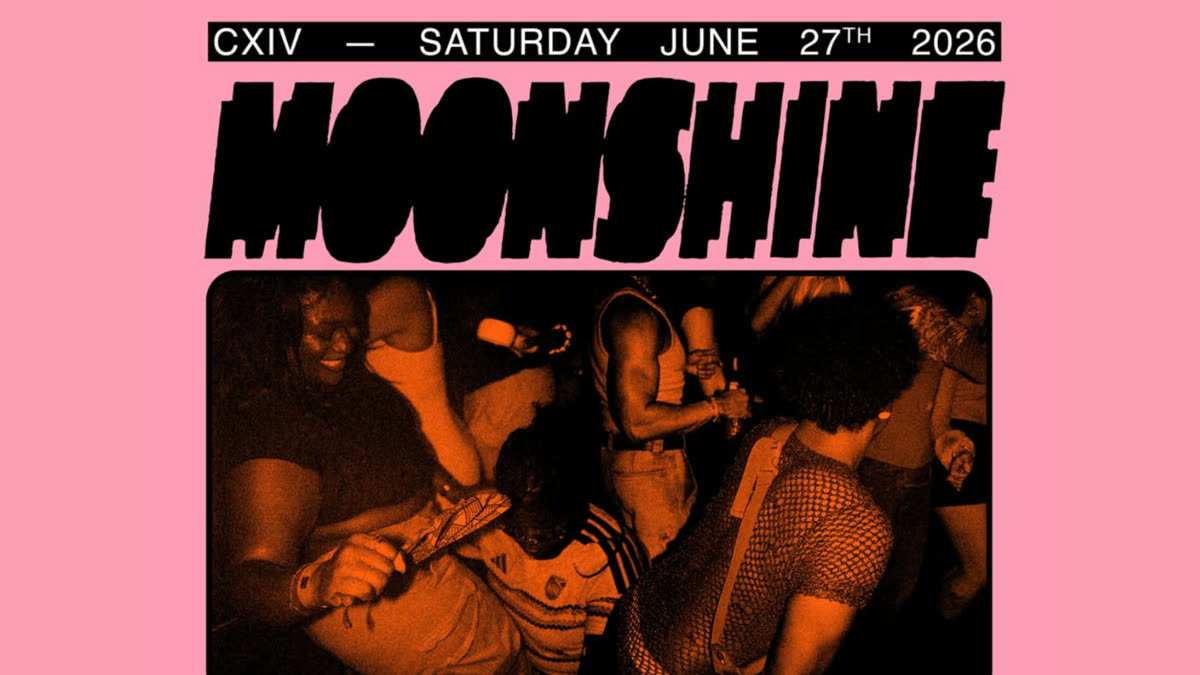
Moonshine x Mookee: how an international music collective manages its fan relationship across a dozen countries
A Saturday night after the full moon, somewhere in Montreal, Paris, Lisbon, or Kinshasa. The location of the next Moonshine night stays secret until the last moment — revealed only by SMS to those who know where to look. The collective has practiced this ritual since its founding in 2014: at Moonshine, SMS was never a secondary channel, but truly the entry point of the experience. Over time, that instinct gave rise to one of the most advanced uses of Mookee to date.
Who is Moonshine
Moonshine is an artist collective, a label, and an event organizer born in Montreal in 2014. It started as a simple monthly warehouse party, held the first Saturday following the full moon and dedicated to African and Afro-diasporic sounds — afrohouse, amapiano, coupé-décalé, gqom, kuduro, kizomba, techno, and many others.
Ten years later, Moonshine has far outgrown the local party scene. The collective has staged nights in Paris, Brussels, London, Amsterdam, New York, Los Angeles, Lisbon, Milan, Barcelona, Santiago, as well as Kinshasa and Abidjan, while performing on stages like Dour Festival, Primavera Sound, and We Love Green. What its team built in Montreal has, over the years, turned into a transcontinental musical phenomenon backed by an ultra-engaged fan community.
What makes Moonshine specific
Moonshine's international trajectory raises challenges rarely seen stacked this high within a single event organization:
- An audience spread across several continents — in Canada, France, the United States, but also Nigeria, Congo, or Greece — each presenting expectations and communication habits specific to its region.
- Several languages to manage in parallel — English, French, Portuguese — to give every fan promotion as natural in their language as in any other.
- Two clearly distinct conversation topics: on one side, selling tickets and running the nights; on the other, introducing fans to the collective's music and that of its affiliated artists. Rarely does an organization combine ticketing and music recommendation this closely within a single fan relationship.
- A contact volume that rules out any manual handling: with a base of tens of thousands of fans worldwide, no interaction can rely on an individual reply anymore.
Moonshine's needs thus took shape around four complementary uses:
- Promoting ticketing, nights, and concerts to the right audience, at the right time.
- Delivering that promotion in several languages, across countries as varied as Canada, France, the United States, Nigeria, Congo, or Greece.
- Answering fan questions about the collective, the nights, practical information, and ticketing.
- Recommending music and sharing links to the tracks of the moment.
The solution: a full integration, not just a conversational agent
What sets Moonshine's use apart is the depth of the integration. The collective's CRM, ticketing, and store are all interconnected with Mookee, allowing data to be cross-referenced rather than handled in isolation. On top of that, every outbound campaign benefits from last-touch attribution tracking, to know precisely which outreach generated which sale.
On this foundation, Moonshine uses nearly all of Mookee's features:
- Fan sign-up: CRM sync, channel tree (conversation launch), SMS, phone call, or messaging.
- Conversational channels: web chatbot, WhatsApp, SMS, RCS — with multilingual support on every channel.
- International coverage: local numbers deployed across a dozen countries.
- Campaigns: fully traceable outbound campaigns.
- Agent intelligence: the full tour schedule and every date's details built into the agent.
- Integrations: CRM, ticketing, and store connected to cross-reference data.
- Oversight: handoff to a human inbox whenever a conversation calls for it.
In practice, a fan might sign up by SMS on a concert night, then receive a targeted music recommendation on WhatsApp, then get followed up on about a date in their country via a local number. At every step, the agent knows their language, their purchase history, and the ongoing tour, with no human intervention at all, except when it truly proves necessary.
What it delivers, in numbers
After several years of use, the results are concrete:
SMS already sent in 2026 to a base of 40,000 fans — after thousands more sent over the years since 2014.
- Particularly fine-grained segmentation: less than 5% of the base is contacted each month, with Moonshine favoring precision over volume.
open rate, with 20% click rate and 4% conversion. These are floor values, since last-touch attribution mechanically underestimates the real impact of campaigns.
Why Moonshine is so advanced on Mookee
This level of maturity, rarely seen elsewhere, comes down to a simple reason: Félix, Moonshine's co-founder, is also Mookee's founder. Originally, the tool wasn't built as a sellable product, but as an internal solution designed to meet the collective's fan-relationship needs, starting in 2014. It evolved across tours before becoming an independent platform, open to other organizers starting in 2025.
This is exactly what's meant by a tool "born in the field": built by event organizers, for event organizers.
Set up a custom agent today
If your organization combines ticketing, a store, a CRM, and several countries like Moonshine, the Stadium plan includes a custom agent configuration by our teams, plus dedicated support.
Further reading
Frequently asked questions
Can a single tool handle both ticketing and music recommendations?+
Yes. That's one of Moonshine's central use cases, combining event promotion and music discovery within the same fan relationship, on identical channels.
How do you manage an audience spread across a dozen countries without piling up tools?+
By relying on local numbers and multilingual campaigns run from a single platform, directly connected to the CRM, ticketing, and store.
Is last-touch attribution reliable for measuring the impact of an SMS or WhatsApp campaign?+
It has the merit of being conservative: by attributing the conversion to the last touchpoint, it gives a floor figure rather than an overstated estimate of the real impact.
Do you need to reach your entire fan base with every campaign to get results?+
No. Moonshine's example proves the opposite: targeted segmentation (under 5% of the base contacted per month) delivers open and click rates well above those of an untargeted mass send.